November is right around the corner, and I couldn’t be more excited. Every year, I dedicate this month to unleashing my creativity. I work in a very data-heavy job, and my creative side often gets pushed to the back burner. But for the last five years, November has been different—I wake up early each morning, sit down with a notebook or laptop, and write. Every single day.
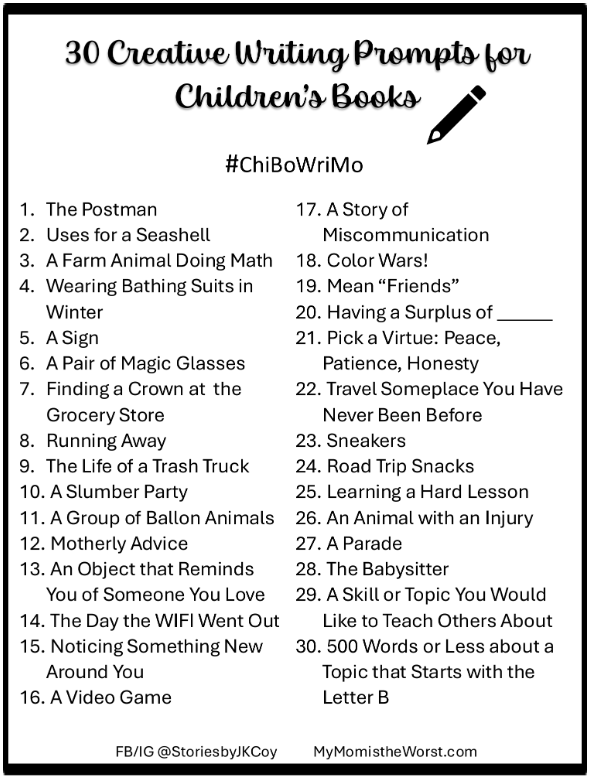
A few years ago, I adapted National Novel Writing Month (#NaNoWriMo) for children’s authors and created Children’s Book Writing Month: #ChiBoWriMo. The challenge is simple and fun—write one story a day using an open-ended writing prompt. With this framework, I’ve written more than 150 children’s stories across five cozy Novembers, and today I’m sharing 30 brand-new prompts to help you start your own creative sprint.
But in full transparency… I’m switching things up this year. After writing 150 children’s stories, I think it’s okay—maybe even necessary—to give my brain a new adventure. So I’m taking it full circle and hopping on the #NaNoWriMo train. This children’s book writer is about to attempt a full-length adult novel!
Will I hit the official 50,000-word goal in November? Honestly, we’ll see. My true goal is to finish a complete rough draft by the end of the year. Wish me luck as I attempt to double (or quadruple!) my daily word count. Here’s to trying new things, stretching our creativity, and letting November surprise us.
And if you love women’s fiction, please reach out—I’m going to need a fresh group of beta readers!
I was recently on the Investor Mama podcast to talk about easy ways to coach your kids through money and business topics in a fun way.
I shared seven conversation starters, and each takes just five minutes or less. You can easily start one of these conversations in the car, at bedtime, at bathtime, in the doctor’s office waiting room, or even sitting around the dinner table.
I recommend starting when your kids are in elementary school, but the great news is that these conversations apply to middle schoolers and high schoolers, too.
Before starting these conversations, I’d encourage you to read your kids some picture books on these topics. The Money Smart Kids series is a great place to start to help get their wheels turning about what it could look like to start their own business – as a kid!
To hear our full podcast conversation, with in-depth examples for each question, listen here (link coming soon).
Remember, these are just a starting place to learn and grow, no wrong answers!
Seven Questions to Get Your Kids Thinking Like an Entrepreneur:
Ask–If you had your own money, what would you buy?
This question creates immediate engagement and helps kids value what comes next. They could brainstorm a list and then pick their Top Three.
You could even help them estimate how much they would have to earn to buy their Top Three items.
This is also a great time to plant the seed about giving.
What type of charity would they want to give to? It can be a fun way to reveal what moves the heart of your child.
Then – get into questions about creating a business (questions 2-7)
2. Ask – If you were to start a business, what product or service would you sell?
Here you can discuss…
… products vs. services
… your child’s unique skill set and strengths (they will love hearing from you, and it’s fun to hear what they think their own best skills are)
…what could they make better? A special kind of roller skate, folding laundry, a service for kids to deliver snacks! All ideas are welcome.
3. Ask – Where would you sell XYZ?
Let them brainstorm locations– school, park, local craft faire, door-to-door. Then make sure to dive into the pros and cons of each (traffic, visibility, safety, cost, fun factor).
4. Ask – How would you let people know about what you are selling?
When I was in college I read something along these lines:
Selling without advertising is like a man winking at a woman in the dark, he knows what he’s doing, but she doesn’t have a clue!
Make it easy, give people a clue!
So how will your kids be bold and get the word out about their business?
Sign, flyers, talking to people 1:1, website, business cards, email, a short video text to family and friends…
Challenge your kids – how will you make your message short and exciting so that people will want to use your service or buy your product?
5. Ask – How much would you sell it for?
If your kids are younger, you may have to help with this one.
Have them think about how much their supplies will cost – for the product and advertising.
Then have them think about how much they want to make each time their product sells. Now add those two numbers together to get the price you will charge.
Example: $1 total in supplies and advertising, and I want to make $5 per item after expenses, so I need to sell each one for $6.
Have them wrap up with a gut-check:
Is that price reasonable for the item I’m selling?
Would I pay that much if I saw this item for sale?
6. Ask – If your product wasn’t selling, what would you do?
Ideas: Could change the location you sell it.
You could change the advertising message: What words and description would make the item more likely to sell? Handmade, one-of-a-kind, will solve XYZ problem.
Or do they need to keep pitching and then adapt their product based on feedback?
In the book How to Sell a Rock, all the neighbors say no – but Sebastian keeps adapting his product and message until he finds what his customers really want.
7. Ask – How will you make sure you have money left to buy more supplies?
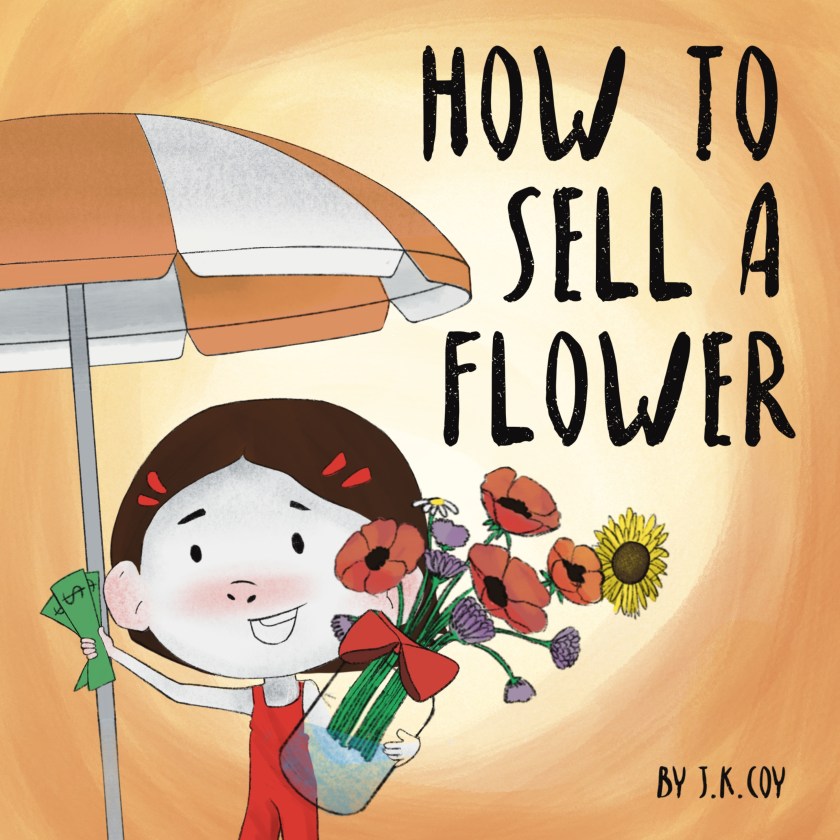
You can help them break their money into three buckets like Sophia did in the book How to Sell a Flower.
She used the three S’s for the money she earned from her business:
Supplies (short-term expenses)
Save (long-term expenses)
Spend (pay yourself and get some of the things you want + need for you)
Helping your kids have this responsible money mindset early on will help make sure they can stay in business and keep earning their own money!
One Final Ask:
Support these entrepreneur kids when you see them.
I once had two neighbor girls come to my door asking to walk my dog.
My dog is kind of a punk, so I didn’t want to put them in that situation. However, I saw their desire to make money, and I hired them to be mother’s helpers for the summer to entertain my girls while I worked from home. We all won!
Gives these kids the gift of practice: Engage in conversation, Give them at-bats to practice, let them work out the kinks, and then let them earn the money!
I’m not talking about Halloween, wearing flannel, or drinking Pumpkin Spice Lattes. I’m talking about my birthday, silly!
And every year around my birthday I like to take a day off and spend a good chunk of the day with me, myself and I.
I work out, I take myself to a slow lunch at a nice restaurant, I go to the beach, I go shopping, I think.
It’s always fun to see where my mind goes when I quiet the noise around me.
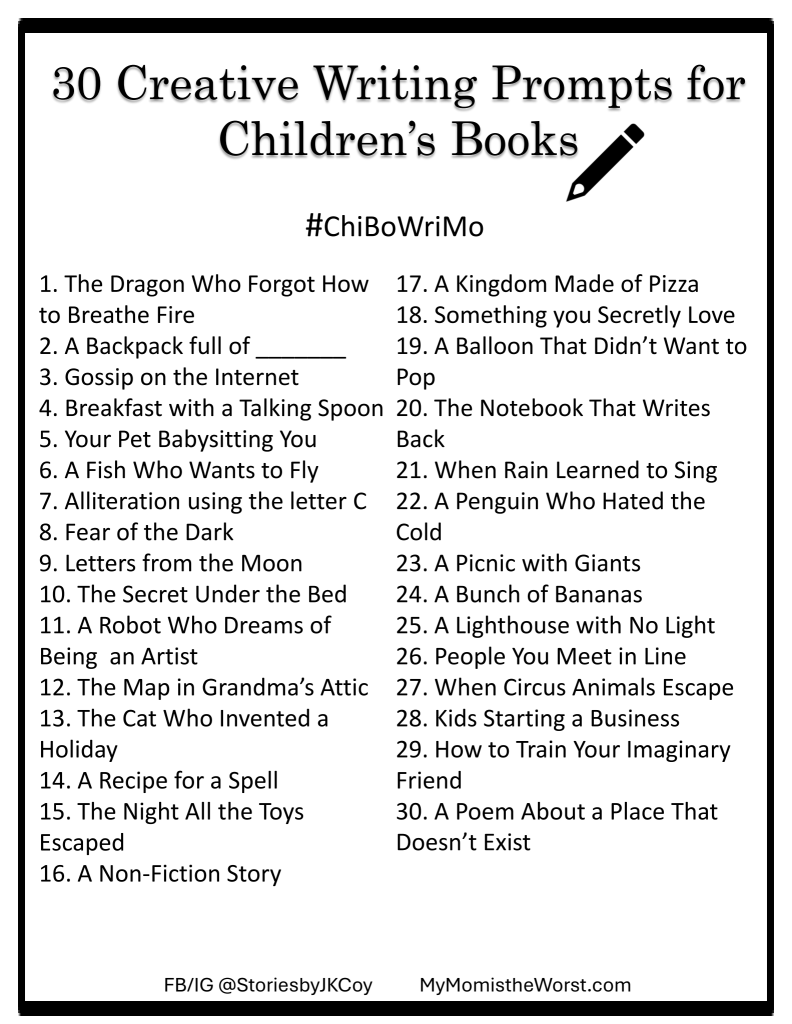
Last week, while on said birthday date, I took out pen and paper and jotted down a list of 30 creative writing prompts while enjoying a Spicy Thai Salad and Cucumber Collins.
If you’ve been here long enough, you know that every November, I write 30 children’s stories based on short prompts to get the creative ideas flowing. I do this for a national challenge called Children’s Book Writing Month or #ChiBoWriMo. This is a spin-off of the long-standing challenge – #NaNoWriMo , but way more fun, in my opinion! 🙂
I like to share the list ahead of time for those that also want to challenge themselves to get in the habit of getting creative each day.
For me, the stories I write in November end up being the starting point for what gets published the following year.
For instance, my newest release How to Sell a Flower, was written last November and published this September.
Give yourself the gift of creativity by setting aside thirty minutes each morning to take a prompt and put pen to paper.
Please don’t take each prompt too seriously. These are meant to be rough (rough) drafts.
The more important aspect is to show up each day and challenge yourself to start each and every story.
Sometimes, it takes a while to get started. Don’t be afraid to sit with a prompt and twist it over in your mind for a bit. This specific part of the process may be more valuable than the actual story you come up with.
Think of it this way:
You will be building your creative muscle every single morning.
What a cool gift to give yourself!
(I’d rank it right up there with giving yourself the gift of alone time)
Growing up we talked a lot about money in my house.
I promise it wasn’t because we had a lot, or because my parents were financial experts.
But my parents were open to having the conversations even if they didn’t get every money detail perfect in their own life. They were willing to share what they learned. And they understood that money was a topic that would come up again and again in my life (for better or for worse), which made it a topic worth spending some time on.
I recall . . .
opening my first bank account,
learning to save for big things that I wanted but didn’t need,
looking at a compound interest table with my Dad,
chatting about why we give money to those in need,
getting a car loan for my first vehicle (even though I had the cash) so that I could build credit,
paying off student loans,
getting a mortgage and buying my first house,
and later in life asking for a raise at work, opening investments, and managing a budget.
My parents were right. No matter what lifestyle you desire, money is a part of your world.
I am grateful my family had basic money conversations when I was young, so that I when I grew up and it really mattered, I felt comfortable around money discussions.
Do I understand it all to this day? Nope.
But I’m also comfortable asking questions about money, and that’s a pretty good starting point.
But parents, I get it.
It’s hard to know where to start with money conversations. Especially if you didn’t have many growing up.
I didn’t want that to be a barrier for the next generation,
so I used my background in Business and Childhood Education to write the Money Smart Kids series.
The first book (How to Sell a Rock) is all about a creative kid named Sebastian. Sebastian really wants a skate board, but his parents challenge HIM to earn the money instead of buying it for him. This leads Sebastian to learning some important lessons about money and starting a business.
(Fun Fact: this book has over 170 reviews on Amazon. See what other parents are saying)
The second book called How to Sell a Can just came out this month. Sebastian is back for more money adventures when he thinks he has a great business idea but it ends up being a total flop!
Fortunately Sebastian’s not one to quit. Once he faces his money challenges and learns how to calculate profit, he’s unstoppable $$$.
I promise, both these books will lead to great money and creative problem solving conversations with your kids (even if money isn’t something you grew up talking about).
Consider this your easy button to introduce money topics with your kids.
Remember, these are the lessons that they will carry in to adulthood.
Think of this as your permission from the universe to write.
Each November I participate in a challenge with a daily goal of writing one children’s book a day. Yes, some of the stories stink, most really. But there are always a few bits of magic in there. And those little gems are the ones I try to massage later in to stories worth publishing.
The key is to do the massaging once the month is over. Having a perfect story by month end is not the goal. Creating thirty totally new stories is.
Here’s how the challenge works:
Set aside thirty minutes a day, for 30 days straight
Use one writing prompt, found below, per day
You can go in order, or skip around, but finish every one – even the ones that don’t inspire you at first glance, because you want to stretch yourself to take on new subjects, perspectives, and ideas
Use the hashtag #chibowrimo on social media to see what others are writing
Don’t overthink it. Just print out the list of prompts, put it by a fresh notebook and pen, and set a reminder on your phone to get started on Nov. 1st.
If you want some other prompt options check out these, and pick your favorite.
The universe is ready to hear your stories. It’s time to let them out.
30 Stories in 30 Days, Children’s Book Writing Prompts:
A story about a backpack full of…
A story about an epic hike
A story about a cell phone that only calls one person
A story about an animal that lives abroad (ie: a pigeon in Paris)
A story about a kidpreneur that makes money for someone in need
A story about the Worst Teacher Ever
A story that uses alliteration. Pick a letter of the alphabet before getting started.
A Story about a topic kids find hilarious
A story about caring for grumpy people or animals
A story about how to clean a big mess
A story about Plan B being better than Plan A
A story about caring for something small and fragile
A story about a person with an embarrassing secret
A story about your new world record in…
A story about a letter that gets lost in the mail and found again a year later
Free Day, YOYO (Your on Your Own)
A story about a Holiday with a twist
A story about an adult that needs help from child
A story that is a song, or has a rap in it, to teach something new
A story about a train carrying a special surprise
A story that is under 100 words
A story about a magical item of clothing
A story that is non fiction (but still interesting)
A story about going to sleep
A story that is a sequel to something else your wrote
A story about finding $100 and having an internal debate about what to do with it
A story about how you stopped the “bad guys”
A story about how to stop anger in the world
A story about being the first kid on the moon
A story that includes Halloween, Thanksgiving, and Christmas – bonus points for New Years too!
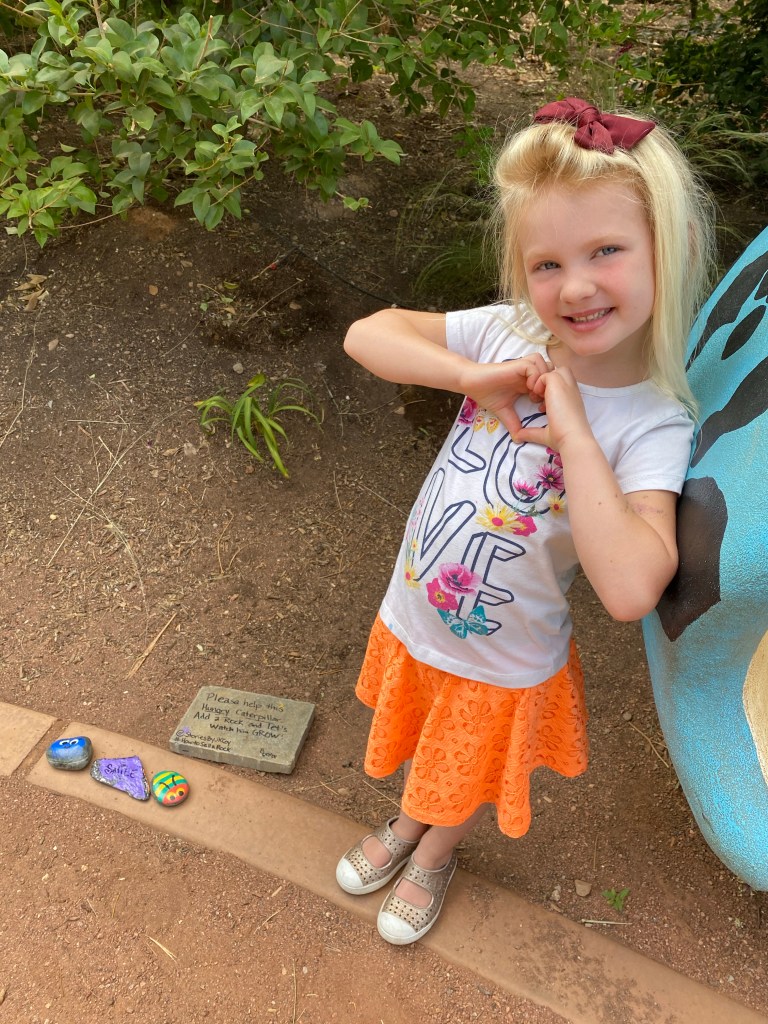
Download the Beyond the Book activity to make your own Rock Caterpillar this weekend, and get a free kids book about money + creative problem solving!
With a three and five year old, we spend a lot of time at the park.
If your family is in the same boat, you may want to try this simple weekend activity. It will make your park visits more fun, and might even put a smile on the face of a stranger.
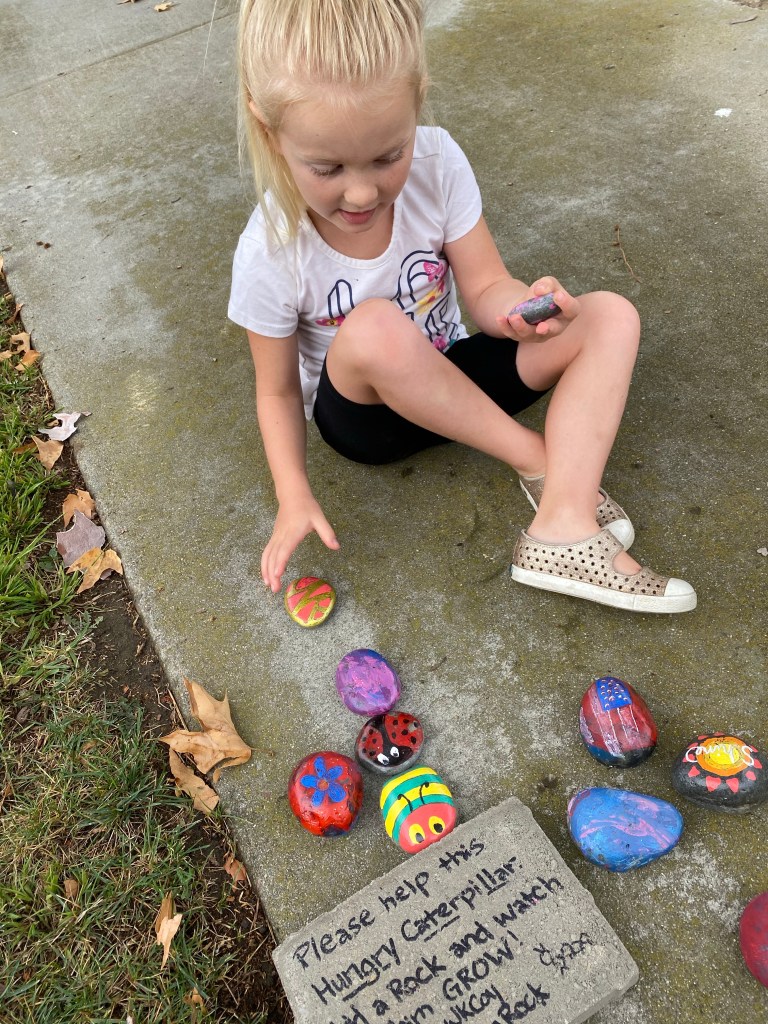
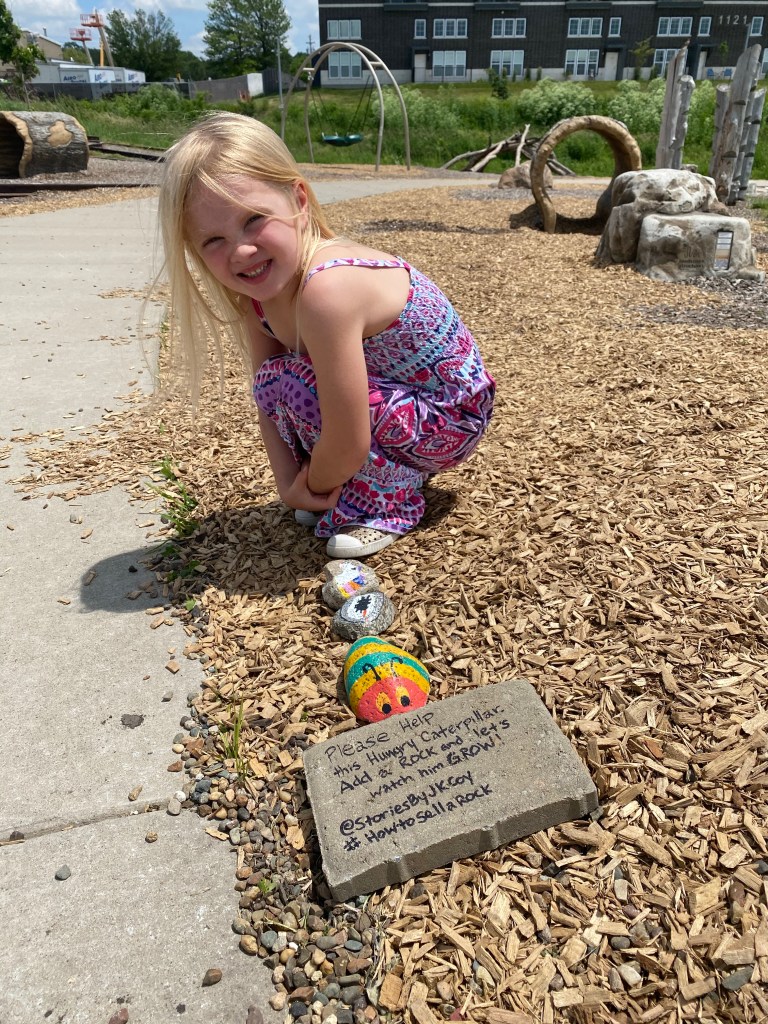
The activity – Rock Caterpillars!
You can download the simple instructions and supply list here.
Each time you visit the park you can bring a fun rock to add.
Plus you can “check” on your caterpillar to make sure he’s growing. Hopefully some other people join the fun and you can have new rocks to admire with each visit.
We set up rock caterpillars at various parks across the country during our road trip, and this morning we got to set one up at our very own neighborhood park!
This activity pairs perfectly with my new book that released this week – How to Sell a Rock.
It’s all about a little kidpreneur that has to figure out how to convince his neighbors to buy a rock so that he can afford a new skateboard. Perfect for kids 5-12yrs.
Bonus – the kindle version is FREE on Amazon until Tuesday! Grab it Here, or the paperback here.
Book Description:
Did you ever want something special as a child, but then your parents said, “No – too expensive.”
Your dreams were dashed.
Oh, Sebastian understands. But he decides he won’t take no for an answer once he learns he can make the money himself – even as a child.
When a scrappy little kidpreneur needs money for a skateboard, he’s going to have to learn how to turn his neighbor’s no’s into yeses if he wants to get rich selling rocks.
How will Sebastian convince his neighbors that what they really need is a rock?
This fun kidpreneur story teaches:
Creative problem solving
How to start a business
How to make Money
How to Save Money
Rock Painting Craft Ideas
Social Skills
Self Reliance
Grit
Confidence
Perfect for home or classroom use
Ideal for Ages 5, 6, 7, 8, 9, 10, 11, 12
Visit: MyMomistheWorst.com for activities and freebies related to the book
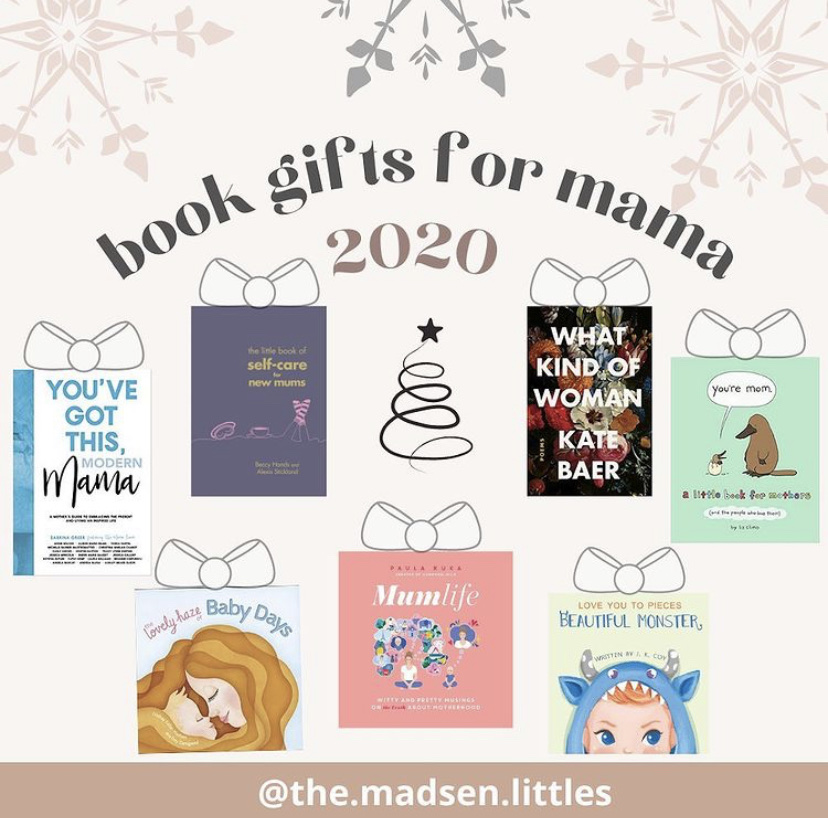
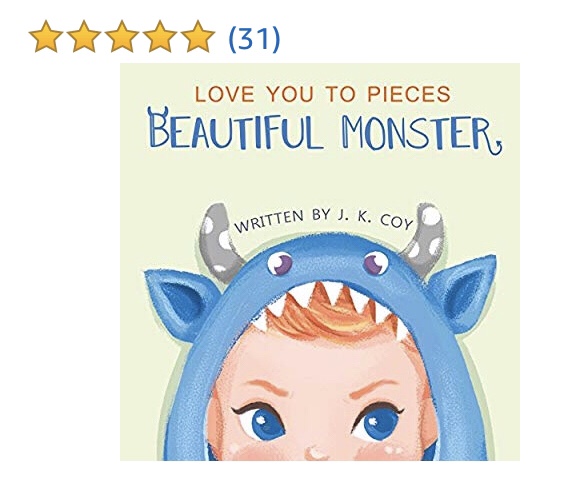
We are so happy that ‘Love You to Pieces, Beautiful Monster’ made the list for new parents with a sense of humor.
Plus, until the end of the month there is a fun deal going on. Buy any title by JK Coy on Amazon or Barnes and Noble, message me the receipt, and I’ll mail you a fancy kids hair bow for each book you bought.
Like all books in the Smart Girl Fairy Tale series, Princess Winnabelle fails often but always learns to solve her own challenging problems. Free today!
Do you have girls, know girls, or teach girls?! Then this is your next read . . .
And it’s FREE today! Just head on over to Amazon and download your free copy here.
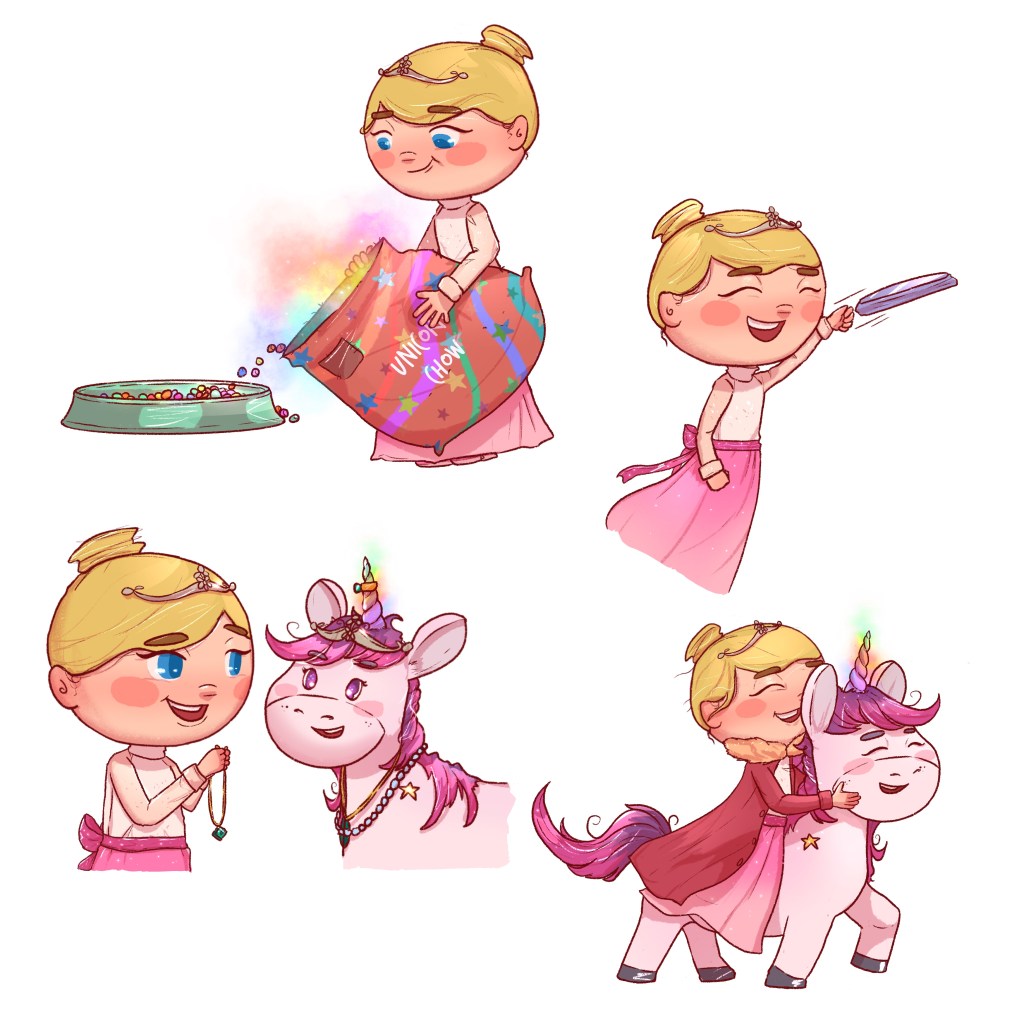
This is book three in the Smart Girl Fairy Tale Series. Like all books in the series, Princess Winnabelle fails and learns to solve her own challenging problems. Through her magical adventures she learns teamwork, honesty, friendship, problem solving, and in book three: responsibility and time management when she has to figure out how to care for a pet unicorn AND go to school.
At midnight tonight the ebook will go up to $4.99, so hurry!
The paperback will be out this week.
Princess Winnabelle and the Pet Unicorn (book description):
♥Oh dear!♥ There’s trouble in the magical Land of Five Lagunas.
All Princess Winnabelle wanted was a friend.What could go wrong with that?
Then she finds a baby unicorn in the snow and showers him with love and care. His magical horn grows bigger and brighter each day, UNTIL winter break ends and . . .
Winnabelle quickly finds out that she has no idea how to care for a pet AND go to school. Her perfect pet starts to destroy the castle and Winnabelle is faced with a tough decision.
Winnabelle knows that a princess can be smart, fancy, strong, and fierce. But she still has a lot to learn before she’s ready to rule the kingdom someday.
Can Winnabelle come up with a creative plan to manage her time and responsibilities,
or will the Queen force her to say goodbye to her new friend?
The clock is ticking. Find out now!
The Smart Girl Fairy Tale Series is perfect for girls 3-9 years old.
These modern fairy tales teach important values for raising strong girls:
Time Management
Responsibility
Honestly
Problem Solving
Friendship
Teamwork
Growth Mindset
Independence
Confidence
Positive Self-esteem
Each value is wrapped in a sweet story that will keep readers entertained and engaged.
Great for:
Girls 3-9yrs
Parents
Classrooms
Churches
Bedtime
Collect them all!
★FREE ‘Beyond the Book’ activities at MyMomistheWorst.com★
Last year I wrote THIRTY children’s stories in the month of November.
Want to join me? I made it easy. Just download this list of writing prompts
Last year I wrote THIRTY children’s stories in the month of November.
I was inspired by some friends that were doing #NaNoWriMo and writing an entire novel in one month. Based on a children’s book word count of 500-1k words, I figured I could handle writing a book a day for the month, and thus Children’s Book Writing Month (#ChiBoWriMo) was born .
Kya Mouse, a character created during a writing prompt
I was able to use the stories I wrote last November to publish three books this year (Check out the Smart Girl Fairy Tale Series), and I hope to do it again.
Want to join me? I made it easy. Just download this list of writing prompts here.
Hang it somewhere special and plan at least thirty quiet minutes a day to sit, think, and write.
Trust me, I know a prompt may seem odd when you first read it, but give it five minutes and see where your mind begins to go. Before you know it, you’ll have a rough draft before you.
And a rough draft is all we are going for here. At the end of the month you can read your stories over and pick a handful that deserve a second draft.
Use #ChiBoWriMo on your social posts so we can cheer each other on.
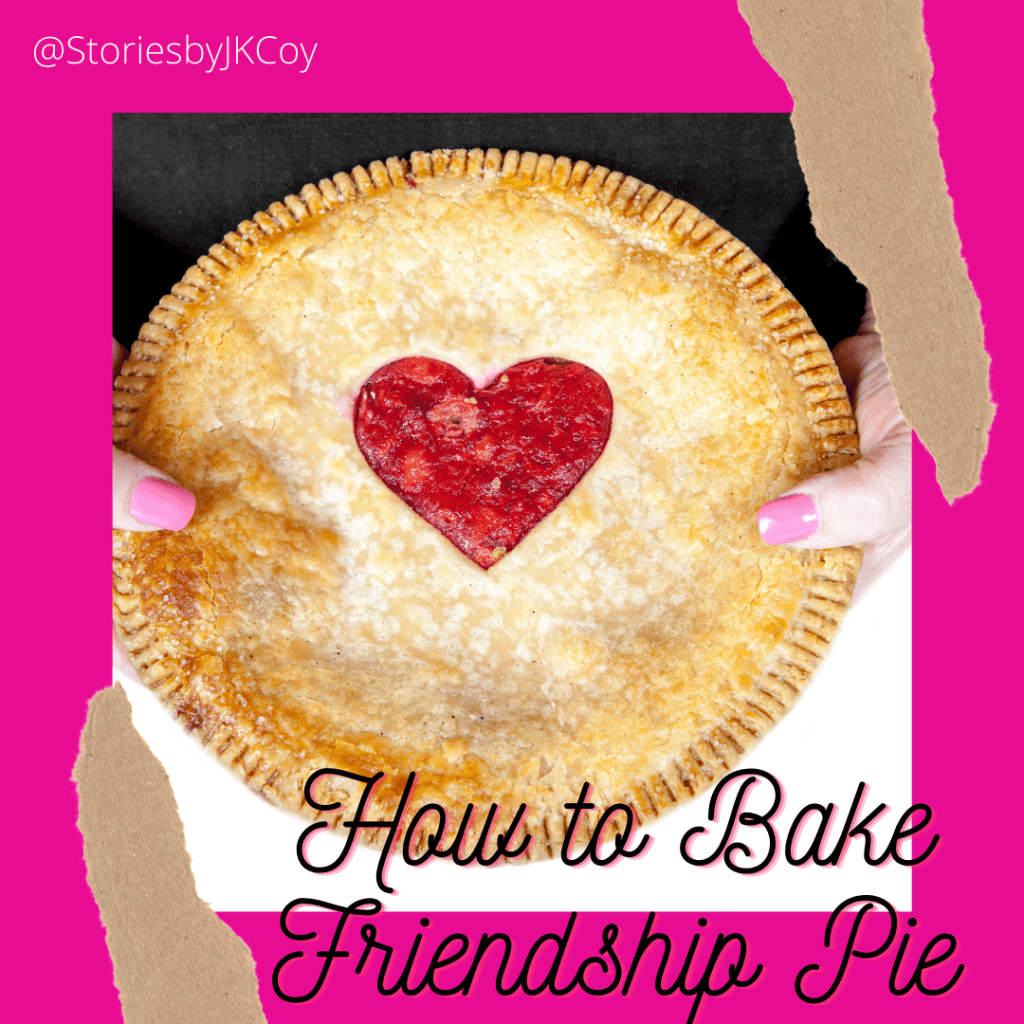
Want an easy recipe that you can make with the kids? Let’s make Friendship Pie.
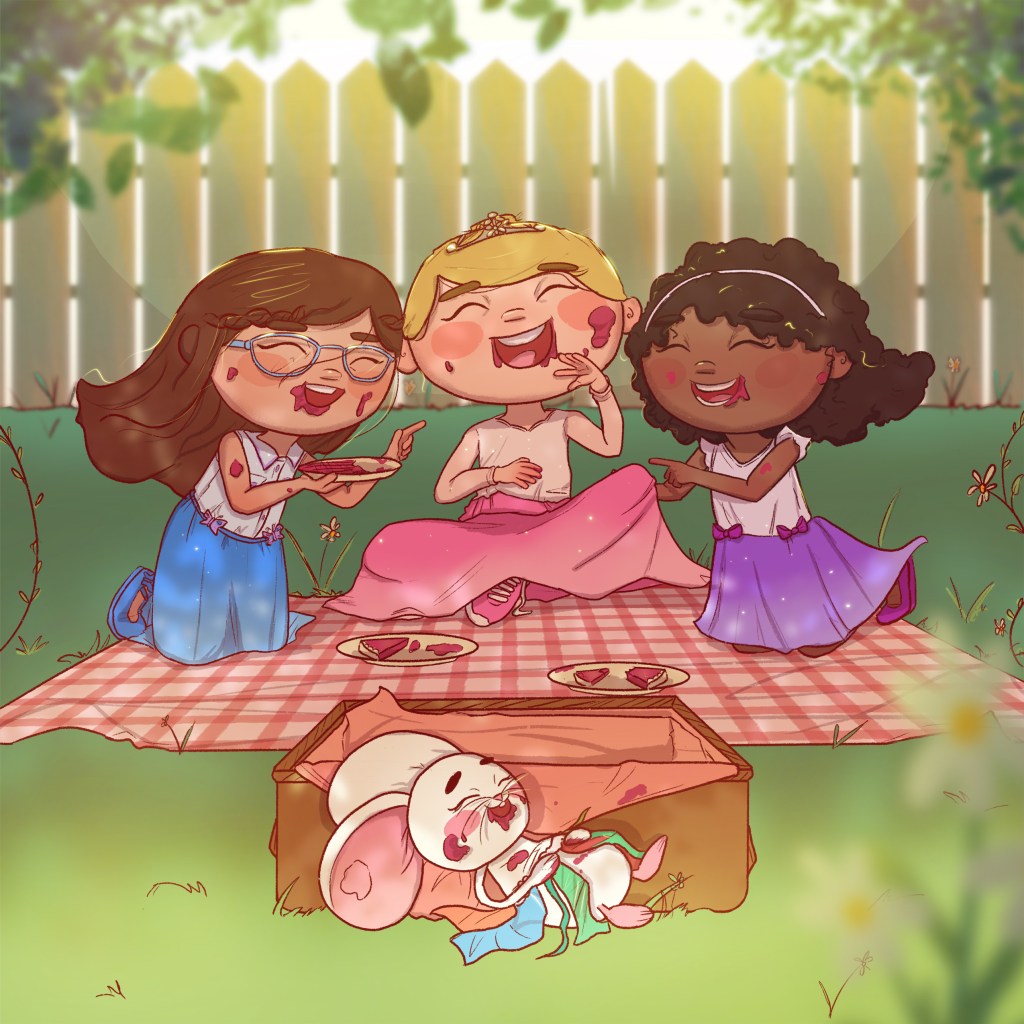
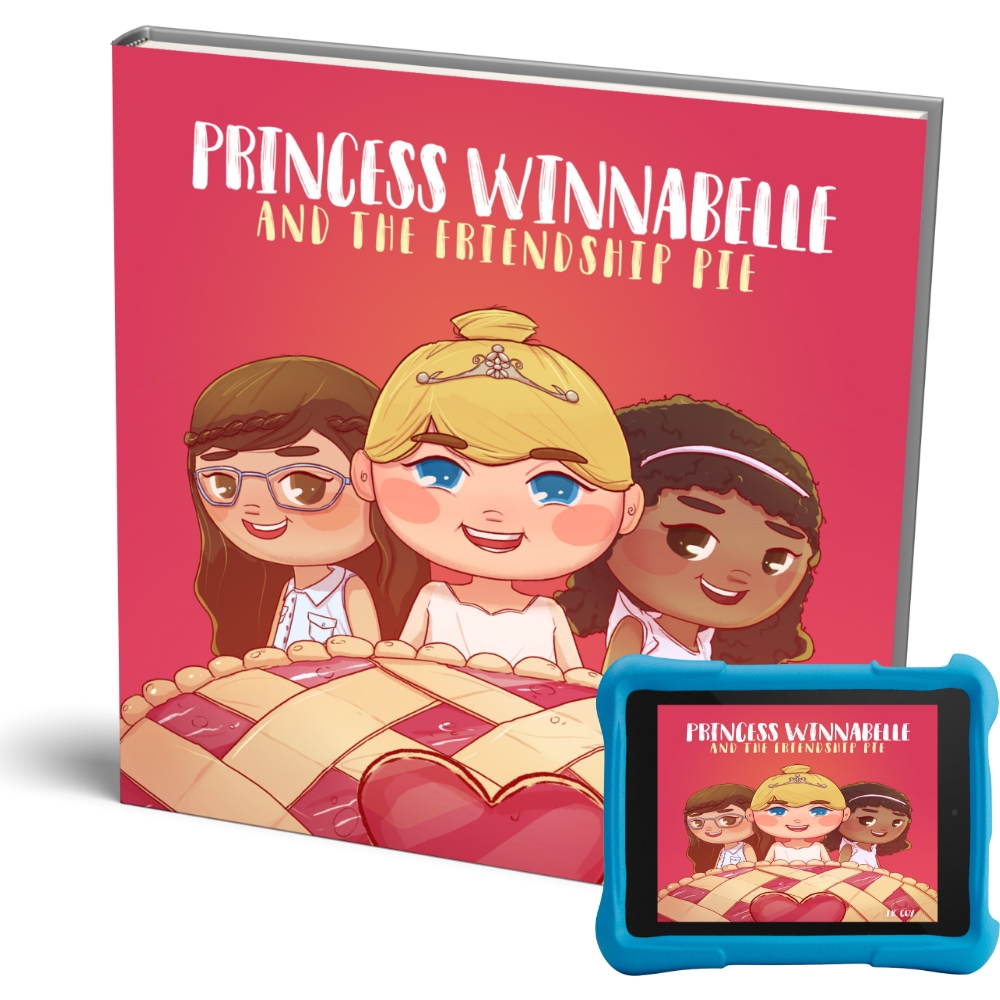
It’s tasty, simple, and pairs perfectly with my newest children’s book release: Princess Winnabelle and the Friendship Pie. It’s a sweet and empowering story for girls – with a fun message of friendship and teamwork baked inside!
Follow the recipe below for a ‘beyond the book’ extension activity. I suggest making two – one for your family and one for a friend. I mean, it is Friendship Pie, it’s meant to be shared!
Princess Winnabelle and the Friendship Pie, Beyond the book activity
Instructions:
Add berries, sugar, and lemon juice to a large saucepan on the stove and heat on medium
Simmer until warm and juicy (about 5-10 minutes) – stir occasionally
Spoon out about 1/2 cup of the juice from the saucepan to a bowl. Stir cornstarch in to the juice until smooth
Bring saucepan of berries back to a simmer and slowly pour the cornstarch mixture in. Stir gently until thickened (2-5 min)
Remove pan from heat and stir in the butter, then allow to cool for 15 minutes. Pour mixture into an unbaked pie crust in a 9″ pie pan.
Use heart cookie cutter to cut out a heart from the center of the additional unbaked pie crust
Lay the 2nd pie crust on top of the berry pie and pinch the top and bottom pie crusts together. Optional: Brush a thin layer of beaten egg white over the top of the pie and sprinkle with a pinch of extra sugar
Bake at 400 degrees F for 40-45 min. Check it at 25 minutes and place a piece of tinfoil over the top if the crust is getting too brown
Remove from oven and cool on a wire rack. Allow it to cool for several hours. Once cooled completely, cut it and serve, or cover it and put it in the fridge to serve the next day.
Tip: You can freeze the baked pie for up to three months! Thaw overnight in the fridge then set it out and let it get to room temperature to serve.
Princess Winnabelle and the Friendship Pie available on Amazon – part of the Smart Girl Fairy Tale Series

















 My Mom is the Worst